Rhetorical Infrastructure,
API Access, and Disaster
Communication in the
Social Media Age
How do platform architectures, API restrictions, and algorithmic logics shape what disaster relief organizations can say — and what scholars can see — during a crisis in the post-API social media age?
Setting the Stage: Platform, Crisis, and the Social Media Age
On January 7, 2025, hurricane-force winds ignited multiple wildfires simultaneously across Los Angeles — the most destructive urban fire event in California history. Within hours, FEMA and the American Red Cross were posting across X and Instagram. One organization posted evacuation directives and grant announcements. The other posted a mother holding a photograph of her immigrant parents that she refused to leave behind. Their posts looked different, sounded different, and mobilized entirely different emotional and institutional registers. Why?
This project investigates how platform infrastructure, organizational identity, and historical temporality shaped the social media crisis communication of FEMA and the American Red Cross (ARC) during major California wildfire events from 2020 to 2025. Drawing on a manually curated corpus of 168 posts across X (formerly Twitter) and Instagram, this study offers a historically situated, methodologically self-aware rhetorical analysis of institutional disaster communication in the post-API social media era.
The 2020–2025 period is not a generic "social media era" — it is a historically specific moment defined by three overlapping crises of media infrastructure. The COVID-19 pandemic restructured how the public inhabits and trusts social media, embedding a new layer of crisis temporality into every disaster event of the period. Twitter's restructuring into X and the APIcalypse — the deliberate restriction of research data access (Bruns, 2019) — fundamentally altered what researchers could know. Instagram's algorithmic reorientation toward visual storytelling and emotional resonance created an environment that rewarded ARC and challenged FEMA in structurally predictable ways. This project treats these transformations not as contextual background but as constitutive elements of the rhetorical situation itself.
This project is also a digital artifact in its own right. Following McPherson (2018), every design decision — the interactive post explorer, the animated charts, the dark mode — embeds a claim about what scholarship can look like in the digital humanities era. The interface does not contain the argument; it is part of the argument.
Historical Specificity
COVID temporality, the Twitter-to-X transition, and API closure produced a historically distinct media environment that shapes every post in this corpus.
Post-API Methodology
The APIcalypse is a form of platform power (Bruns, 2019). This project treats manual curation as a principled, theoretically grounded methodological response — not a workaround.
Rhetorical Analysis
Close reading of how FEMA and ARC construct authority, empathy, and urgency — analyzing logos, pathos, and ethos across platform environments.
Organizational Identity
How does the difference between a federal agency and a humanitarian nonprofit produce systematically distinct crisis communication registers — even on the same platform?
Corpus Breakdown: 168 Posts
| Organization | Platform | Posts | Period |
|---|---|---|---|
| FEMA | X (Twitter) | 33 | 2020–2025 |
| FEMA | 63 | 2020–2025 | |
| American Red Cross | X (Twitter) | 46 | 2020–2025 |
| American Red Cross | 24 | 2020–2025 | |
| Total | 168 | ||
Theoretical Frameworks & Scholarly Conversations
This project draws on three interconnected bodies of scholarship. Click any thinker to explore how their work shapes this analysis.
Platform Infrastructure Studies
The concept of infrastructure, as developed in science and technology studies and extended to digital media, directs attention to the systems that organize communication without being visible to those who use them. Starosielski (2015) demonstrates that digital infrastructure carries colonial histories — submarine cable networks follow 19th-century telegraph routes. This historicizing move is essential: the social media platforms used by FEMA and ARC are not neutral channels but layered infrastructures with political genealogies.
Bucher (2018) extends this analysis to platform algorithms, showing how algorithmic logics are not mere delivery mechanisms but active editorial forces that determine what crisis messages circulate, for whom, and under what conditions. Kennedy (2016) adds a data studies dimension, examining how the normalization of social data mining creates conditions that crisis communicators must navigate.
Starosielski (2015) Bucher (2018) Kennedy (2016) Hu (2015)Post-API Digital Methods
The "APIcalypse" (Bruns, 2019) — the deliberate restriction of programmatic social media data access by major platforms — has fundamentally restructured the conditions of digital scholarship. Bruns (2019) argues this is not a technical accident but a deliberate exercise of platform power aimed at limiting independent scholarly accountability. Freelon (2018) and Perriam et al. (2020) extend this to methodological practice, calling for qualitative and interpretive approaches that theorize the conditions of research rather than simply mourning lost computational access.
This literature directly motivates this project's methodological stance: treating manual curation not as a workaround but as a principled scholarly response, and treating corpus size as a finding about platform governance rather than a limitation to be apologized for.
Bruns (2019) Freelon (2018) boyd & Crawford (2012) Perriam et al. (2020) Walsh (2023) Lomborg & Bechmann (2014)Crisis Communication Theory
Kent and Taylor's (2002) dialogic theory of public relations identifies mutuality, propinquity, empathy, risk, and commitment as the five principles of genuinely relational institutional communication — a framework that exposes the systematic difference between FEMA's broadcast-oriented communication and ARC's more community-embedded relational practices. Coombs's (2022) Situational Crisis Communication Theory (SCCT) provides a framework for understanding how organizational type and crisis attribution shape message selection.
Jin, Liu, and Austin's (2014) Social-Mediated Crisis Communication (SMCC) model is essential for understanding how platform environment mediates the relationship between institutional communicators and crisis-affected publics. Their empirical work demonstrates that platform form — not just content — shapes public trust and response during disasters.
Kent & Taylor (2002) Coombs (2022) Jin, Liu & Austin (2014) Austin et al. (2017) Zappavigna (2012)Digital Humanities & Representation
Drucker (2011, 2020) argues that humanities scholars must resist the positivist assumptions embedded in conventional data visualizations. Her concept of capta — data as always-already interpreted rather than neutrally given — grounds this project's visualization design: every chart is an argument, not a transparent window onto fixed facts. McPherson (2018) insists that technical design is never politically neutral: the UNIX operating system's modular architecture carried the same logic of social segregation as postwar America, and every digital interface embeds values about knowledge and difference.
Together, these scholars establish that the design of this website is itself an act of scholarly argumentation — not a container for findings but an enactment of claims about what knowledge looks like.
Drucker (2011, 2020) McPherson (2018)Theoretical Synthesis
These four bodies of scholarship converge on a single theoretical claim: that social media communication cannot be understood apart from the infrastructural, political, and historical conditions that produce it. Crisis communication does not simply happen to occur on platforms; it is constitutively shaped by platform affordances, algorithmic logics, organizational identities, and the historical specificity of the moment. This project's analytical framework sits at the intersection of platform infrastructure studies, post-API digital methods, crisis communication theory, and digital humanities — bringing them into conversation to ask questions that none of them could address alone.
Digital Studies
- Drucker (2011, 2020)
- McPherson (2018)
- Hu (2015)
Infrastructure Studies
- Starosielski (2015)
- Bucher (2018)
- Kennedy (2016)
Post-API Methods
- Bruns (2019)
- Freelon (2018)
- Perriam et al. (2020)
- Walsh (2023)
- Lomborg & Bechmann (2014)
- Weller (2015)
Crisis Communication
- Jin, Liu & Austin (2014)
- Austin et al. (2017)
- Kent & Taylor (2002)
- Taylor & Kent (2014)
- Coombs (2022)
- Zappavigna (2012)
Communications Infrastructures Accrete
The 2020–2025 corpus does not exist in a historical vacuum. It sits at the intersection of three overlapping temporal arcs: the long history of disaster communication media, the compressed transformation of social platforms from open to closed, and the COVID-19 pandemic's restructuring of media culture. Understanding these layers is essential to interpreting what FEMA and ARC could and could not say — and why.
Disaster relief organizations have always operated within media infrastructures that shaped what they could communicate, to whom, and when — from telegraph-dispatched disaster declarations in the 1880s to radio-broadcast evacuation orders in the mid-20th century, to the broadcast television campaigns that made the Red Cross a household institution by the 1990s. As Starosielski (2015) argues, all media infrastructures are historically layered: today's social platforms do not replace earlier systems but accrete alongside and through them, inheriting their geographies, power asymmetries, and institutional relationships.
The period 2020–2025 represents the late phase of social media's transformation from open to closed. Twitter, which had functioned since 2006 as a relatively open public infrastructure for crisis communication — with APIs enabling both organizational reach and scholarly scrutiny — was restructured under Elon Musk's 2022 acquisition into X, with a fundamentally different orientation toward public information access. Instagram simultaneously transformed from a photo-sharing platform into an algorithmically curated video-and-commerce environment prioritizing emotional resonance over informational content. For crisis communicators, these transitions meant adapting established communication practices to environments actively shifting beneath them. For researchers, they meant confronting the APIcalypse: the systematic removal of data access infrastructure (Bruns, 2019).
The COVID-19 pandemic added a third dimension. It did not simply occur alongside the wildfires as one more crisis to manage; it fundamentally restructured the media environment in which all crisis communication occurred. Elevated social media use, accelerated institutional digital transformation, and profound shifts in public trust in government and expert institutions were all features of the information environment that FEMA and ARC were navigating. The posts in this corpus cannot be read apart from these layered historical conditions.
Five Years of Crisis & Platform Change
The 2020–2025 period was not a stable media environment. Click any event to learn more about its significance for this project.
What This Study Asks
Three interrelated questions guide this analysis, each targeting a different dimension of the relationship between platform, organization, and crisis communication. Together they constitute a layered inquiry: the first question asks about the medium, the second about the institution, and the third about the historical moment — corresponding to the three constitutive forces identified in the introduction as shaping the 2020–2025 crisis communication landscape.
How do the distinct affordances of X and Instagram — including algorithmic feeds, hashtag ecology, media format constraints, and audience expectations — shape the crisis communication strategies of FEMA and the American Red Cross during California wildfires between 2020 and 2025?
In what ways does organizational type — specifically the distinction between a federal government agency (FEMA) and a quasi-governmental humanitarian organization (ARC) — shape the rhetorical frames, appeals, and registers deployed in wildfire-related social media posts?
How did the historically specific conditions of the 2020–2025 period — including COVID-19 pandemic temporality, the Twitter-to-X platform transition, and the progressive closure of API-based research access — shape institutional crisis communication practices and the methodological possibilities available to study them?
How This Study Was Conducted
Research Design: Qualitative Rhetorical Analysis
Answering the three research questions posed above requires methods that are sensitive to language, form, and historical context — methods capable of reading how crisis messages work rhetorically, not merely what they say. This study therefore employs qualitative rhetorical analysis as its primary method, drawing on Aristotle's tripartite framework of rhetorical appeals — logos (reason/evidence), pathos (emotion/affect), and ethos (credibility/authority) — to systematically analyze how FEMA and the American Red Cross construct their crisis communication on social media. This framework is supplemented by Kent and Taylor's (2002) dialogic theory of public relations and Coombs's (2022) Situational Crisis Communication Theory.
Corpus Construction
The corpus of 168 posts was built through systematic manual curation of the verified public accounts of both organizations on X and Instagram. Posts were identified through platform-native search, date-range filtering, and hashtag tracking, using wildfire-relevant search terms (e.g., #CaliforniaWildfires, #LAFires, #DixieFire). All posts were archived with full metadata including date, engagement metrics where visible, media type, and direct URL.
| Organization | Platform | Posts | Period |
|---|---|---|---|
| FEMA | X (Twitter) | 33 | 2020–2025 |
| FEMA | 65 | 2020–2025 | |
| American Red Cross | X (Twitter) | 46 | 2020–2025 |
| American Red Cross | 24 | 2020–2025 | |
| Total | 168 | ||
Note on corpus size: The original project proposal projected approximately 240 posts (60 per organization-platform combination). The final corpus of 168 posts reflects the actual verified population retrievable from both platforms — itself a finding about platform governance and API-era access constraints (boyd & Crawford, 2012; Bruns, 2019; Freelon, 2018).
On Corpus Size: A Note for Quantitatively-Oriented Readers
The 168 posts in this corpus are not a sample — they constitute the complete, retrievable population of wildfire-related posts made by these two organizations on these two platforms across this five-year period. The corpus size is therefore not a methodological choice but a structural constraint: a direct consequence of platform power — what boyd and Crawford (2012) would recognize as an instance of the access inequalities that are structurally constitutive of big data research environments. Twitter's 2023 API closure made large-scale automated retrieval impossible; Instagram's interface further limits systematic collection. The corpus size is itself a finding about platform governance.
More fundamentally, this study does not seek the kind of statistical generalizability that larger samples support. Qualitative rhetorical analysis operates under a different epistemological logic: it seeks theoretical depth and interpretive richness, not statistical representativeness. The question this study asks — how do these organizations frame their crisis communication, and why does it differ across platforms and organizational types? — is inherently a question of meaning, not frequency.
"The logic of qualitative research is not sampling logic but rather theoretical logic... The goal is theoretical elaboration, not statistical generalization." — Tracy, S. J. (2010). Qualitative quality: Eight 'big-tent' criteria for excellent qualitative research. Qualitative Inquiry, 16(10), 837–851.
As Lincoln and Guba (1985) establish in their foundational work on naturalistic inquiry, the appropriate criteria for evaluating qualitative work are credibility, transferability, dependability, and confirmability — not sample size or statistical power. A carefully analyzed corpus of 168 posts, read with theoretical rigor and methodological transparency, can generate more significant scholarly insight than a poorly theorized dataset of thousands.
Scope and Delimitations
This study focuses exclusively on the original post content — the messages, captions, images, and multimedia published directly by the verified official accounts of FEMA (@fema) and the American Red Cross (@americanredcross) on X (formerly Twitter) and Instagram. The analysis does not include audience comments, replies, or reactions (likes, shares, retweets/reposts); these forms of audience engagement fall outside the scope of this project.
This delimitation is both methodologically principled and analytically motivated. The research questions of this study concern how these organizations frame and construct their crisis communication — that is, the rhetorical choices made by institutional communicators when they speak to publics during disasters. Audience comments and engagement metrics reflect public response and reception, which are substantively different analytical objects requiring different methods (e.g., audience reception studies, content engagement analysis). Incorporating them would shift the study from an organizational communication analysis to an audience effects study, which is beyond the scope of this project.
Posts from affiliated regional accounts (e.g., @RedCrossLA, @SoCal_RedCross) are included only when reshared or directly referenced by the national accounts analyzed. Posts from third-party accounts reshared by FEMA or ARC through Instagram's broadcast channel feature are included as part of FEMA's and ARC's curated communication strategy — their act of redistribution constitutes a communicative choice within scope.
Analytical Procedure
Corpus Collection & Archiving
Manual collection of all publicly available wildfire-related posts from @fema and @americanredcross on X and Instagram (2020–2025). Each post archived with date, URL, media type, engagement data, and full caption text.
Rhetorical Coding
Each post coded for primary rhetorical appeal (logos, pathos, ethos) based on dominant persuasive strategy. Coding applied iteratively, with close attention to textual markers, visual choices, hashtag use, and platform-specific formatting decisions.
Platform Comparative Analysis
Systematic comparison of communication strategies across X and Instagram for each organization. Focus on how platform affordances — image primacy, caption length norms, algorithmic incentives — shape rhetorical choices.
Organizational Comparative Analysis
Cross-organizational comparison to identify systematic differences attributable to organizational type (federal agency vs. humanitarian nonprofit) rather than platform environment.
Temporal & Contextual Analysis
Interpretation of findings within the historically specific context of 2020–2025: COVID temporality, platform transitions, API closure, and the escalating severity of California wildfire events.
What the Data Reveals
Rhetorical analysis of all 168 posts, comparing FEMA and ARC by organization, platform, and wildfire season. The four visualizations below are interpretive arguments, not neutral displays — each is accompanied by analytical prose that explains what the patterns mean.
Rhetorical Appeals by Organization
FEMA relies heavily on logos (procedural, fact-based) while ARC favors pathos-centered, narrative communication.
Post Format Distribution
Format choices signal institutional identity: ARC uses visuals and video to humanize; FEMA relies on infographics and text.
Posting Frequency by Wildfire Season
Post volume across both organizations tracks escalation events — the 2025 LA fires produced the highest sustained communication activity.
Dialogic Features
ARC posts score higher on dialogic principles — empathy, interactivity acknowledgment, invitation to respond — than FEMA posts.
Reading the Charts: What the Data Means
The four visualizations above are not neutral representations of fixed data. Following Drucker's (2011) insistence that humanistic graphics must show the act of interpretation rather than hide it, each chart is an argument — a claim about pattern, difference, and meaning — that requires interpretive prose to complete it. What follows is that prose.
The rhetorical appeals chart reveals the sharpest organizational divergence in the corpus. FEMA's posts are overwhelmingly logos-dominant across both platforms: procedural directives, administrative announcements, grant authorizations, deadline reminders, and shelter coordinates. The signature FEMA Instagram post is an infographic — a designed graphic on a wildfire-sky backdrop — presenting three access channels (web, app, phone) in bullet-point format. The signature FEMA X post is an institutional announcement: "We approved a Fire Management Assistance Grant (FMAG) for the Mountain Fire to help cover firefighting costs in Ventura County, California." Both are correct, complete, and deliberately without affect. ARC's posts distribute very differently: pathos dominates across both platforms, but with particular intensity on Instagram. The corpus's highest-engagement post is ARC's September 11, 2020 Instagram: "Millions of acres have been consumed by wildfires in the west and in some places entire towns are destroyed. Over 1,000 Red Cross disaster workers are responding." 1,455 likes. The photograph — wildfire illuminating a night sky — does rhetorical work that no infographic can replicate.
The format distribution chart makes visible an asymmetry that is easy to miss in individual posts: ARC deploys Instagram's full affordance range (multi-photo carousels, reels, Stories) while FEMA produces nearly identical content across both platforms — the same three-channel assistance instructions appearing as a styled infographic on Instagram and as plain procedural text on X, with minimal adaptation. This asymmetry is not aesthetic — it is institutional. ARC is a humanitarian organization for which storytelling is a resource mobilization tool; it learns platform norms because engagement is existential. FEMA is a federal agency for which information distribution is a legal obligation; platform aesthetics are secondary to accuracy and compliance. As Zappavigna (2012) identifies, social media discourse constructs affiliation through tone, repetition, and platform-native forms: ARC builds affiliation actively; FEMA largely does not.
The posting frequency chart reveals a temporal pattern with significant interpretive implications. Both organizations concentrated communication during acute crisis events — the September 2020 West Coast fires, the August 2021 Dixie Fire, and above all the January 2025 Los Angeles fires — and fell nearly silent between seasons. But the 2025 LA fires cluster is qualitatively different from earlier ones: both organizations posted more frequently, across more formats, and with more explicit interagency coordination than in any previous season. FEMA's LA Wildfires broadcast channel — redistributing content from @Cal_OES, @sbagov, @epagov, @listoscalifornia, and @redcrossla — represents a new institutional form: the federal agency as platform aggregator, orchestrating a multi-agency information ecosystem through Instagram's own infrastructure. This is not how FEMA communicated in 2020. It is the product of five years of platform learning — and of a post-API environment in which the broadcast channel is one of the few remaining tools for systematic public-facing coordination (boyd & Crawford, 2012; Bruns, 2019).
The dialogic features chart confirms a finding consistent across the entire corpus: ARC's communication is more dialogic, by every criterion Kent and Taylor (2002) specify, than FEMA's. ARC posts invite response, acknowledge community, name individuals, and position the organization as partner rather than authority. FEMA posts broadcast. This difference is not a failure of FEMA's social media team — it is the predictable output of a federal bureaucracy operating within strict communication protocols, legal constraints, and chain-of-command information release requirements. What is analytically significant is not the difference itself but its durability: across five wildfire seasons, two platforms, and major shifts in platform architecture, the logos-FEMA/pathos-ARC pattern holds without exception. Organizational rhetorical identity, the evidence suggests, is more durable than platform logic.
Key Analytical Findings
Platform Form Shapes Rhetoric
Instagram's image-first interface consistently elicits more emotionally resonant posts from both organizations, while X's retweet culture incentivizes informational brevity and procedural updates.
COVID Temporality Complicates Crisis
Posts from 2020–2021 reflect a layered crisis environment in which wildfire urgency competed with pandemic fatigue. Both organizations adjusted tone and frequency in ways not visible in pre-2020 data.
The APIcalypse as Rhetorical Fact
The closure of Twitter's free API tier in 2023 constitutes not merely a methodological challenge but a form of platform power that makes certain forms of institutional communication harder to study and therefore easier to naturalize.
Institutional Identity Persists Across Platforms
Despite platform differences, FEMA's logos-driven procedural ethos and ARC's pathos-centered narrative voice remain recognizable across X and Instagram, suggesting that organizational rhetorical identity is more durable than platform logic.
Browse the Dataset
The complete 168-post corpus — X (Twitter) and Instagram. Note: Analysis covers original posts only from official accounts; comments, likes, and audience reactions are outside scope. Use the platform tabs to switch between platforms, filter by organization or rhetorical appeal, and click any post for full content, analysis, and a direct link to the original.
The Crisis Behind the Data
California's 2020–2025 wildfire seasons produced some of the most devastating disasters in state history, reshaping how communities and institutions communicate during emergencies.
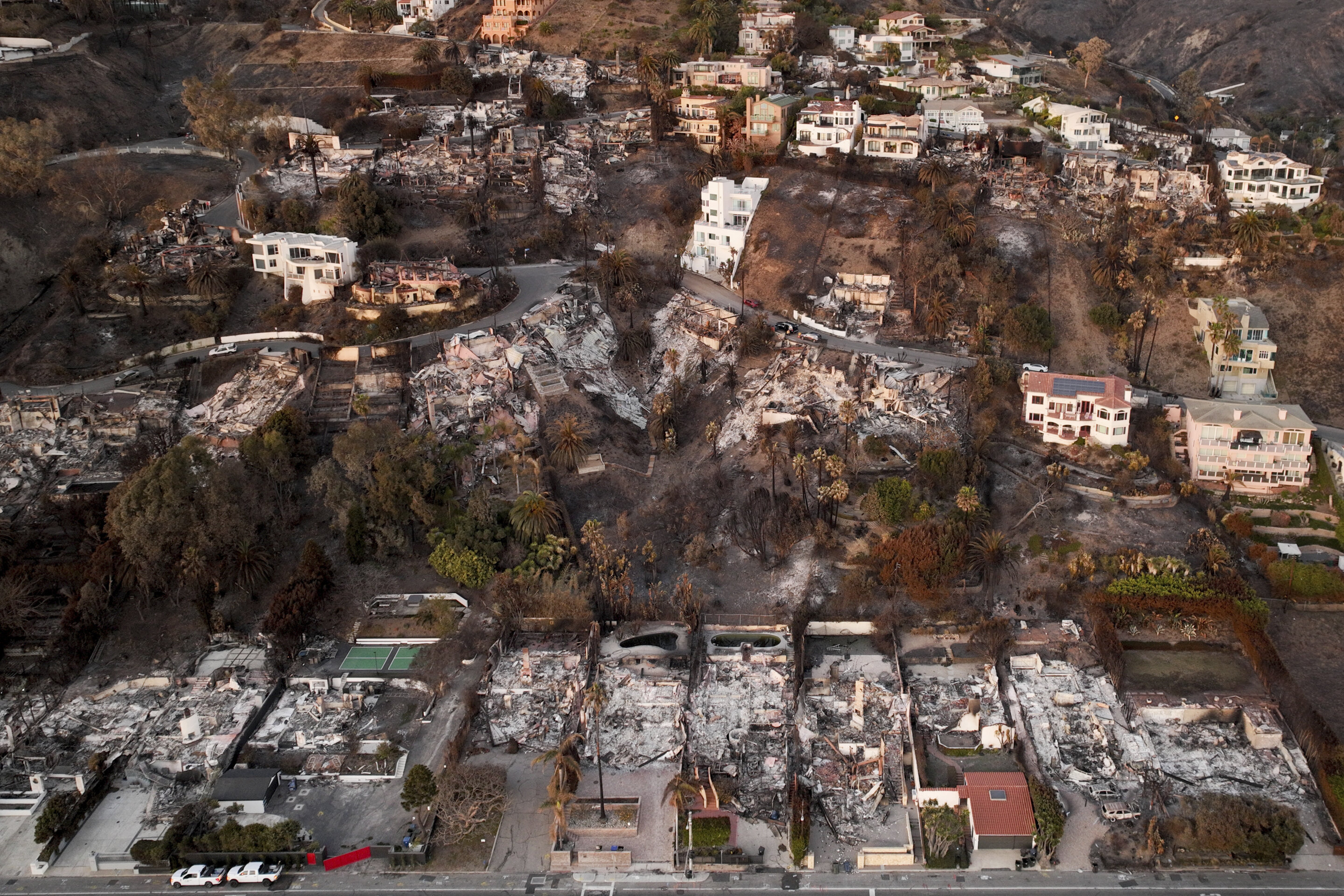
Aerial view of destruction across the Los Angeles region during the January 2025 fires, which burned through the largest urban area scorched in California in at least 40 years.
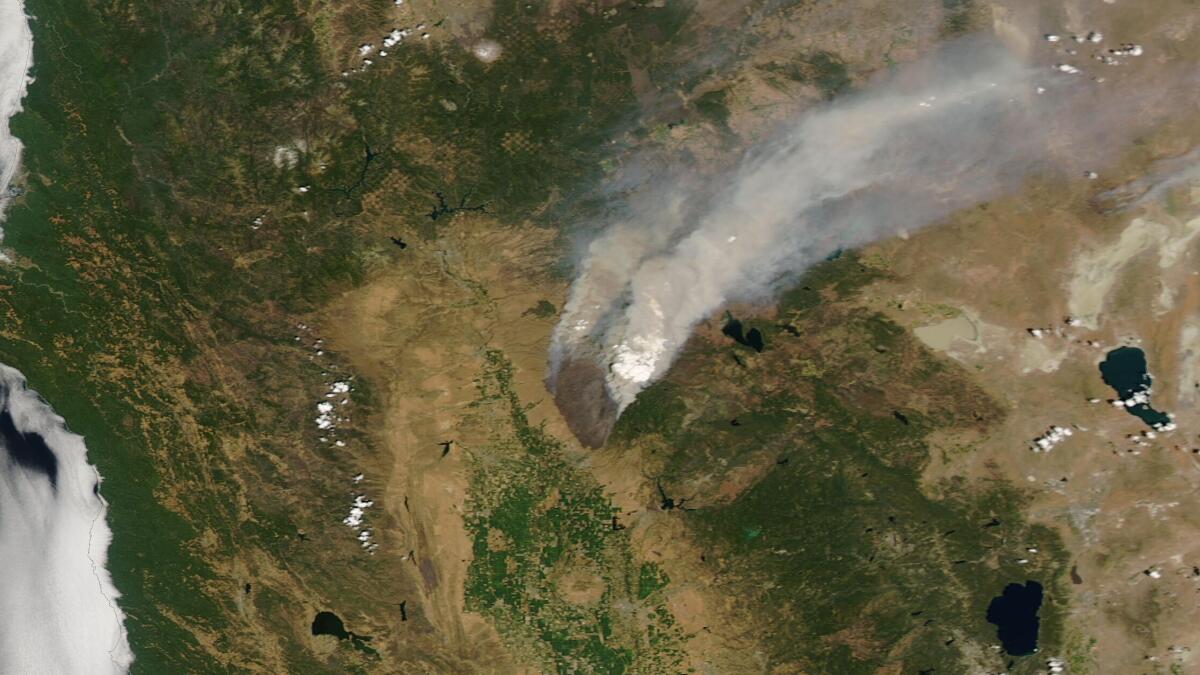
Satellite imagery captures the scale of California wildfires, providing context for the surge in crisis communication volume during peak fire seasons.
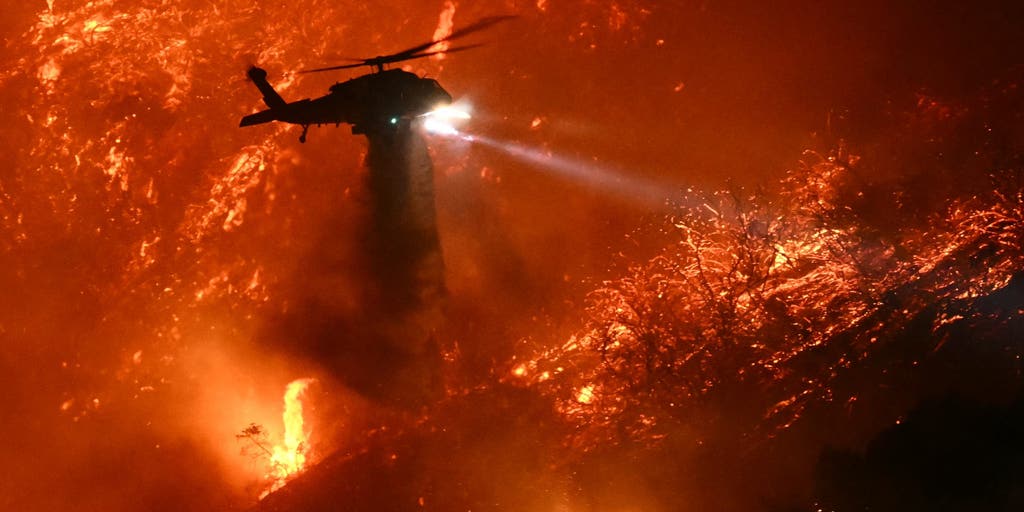
FEMA and ARC coordinate communication around firefighting operations, producing distinct rhetorical strategies for public and institutional audiences.
Interpreting the Findings
Platform Infrastructure as Active Rhetorical Force
The three research questions posed at the outset of this study — on platform affordances, organizational identity, and historical temporality — find consistent and mutually reinforcing answers in the corpus. The most foundational finding is that platform architecture shapes rhetorical choice in systematic, observable ways. Instagram's image-primacy interface consistently elicits more emotionally resonant communication from both organizations. ARC's Instagram posts are markedly longer, more narrative, and more pathos-dominant than their X counterparts — not because the organization communicates differently, but because the platform's affordances reward certain registers and penalize others. FEMA's Instagram presence, similarly, defaults to designed infographics that translate procedural information into shareable graphics — a format that Instagram's visual economy demands but that X's text-forward culture makes unnecessary.
Key Insight: Platform Affordances Are Not Neutral
Instagram's algorithmic reward structure — prioritizing engagement, visual impact, and emotional resonance — is not a neutral distribution mechanism. It is an active editorial force (Bucher, 2018) that systematically advantages certain rhetorical registers over others. FEMA and ARC do not simply "use Instagram" — they are shaped by it. This is visible in the linguistic texture of ARC's Instagram posts: the affiliative functions Zappavigna (2012) identifies as characteristic of social media discourse — hashtag community-building, ambient address, and constructed shared feeling — appear with much greater frequency on Instagram than on X.
Organizational Identity as Rhetorical Resource
The contrast between FEMA and ARC across the full 168-post corpus is stark and consistent. FEMA operates primarily in a logos register: procedural, institutional, deferential to local authority, administratively precise. ARC operates primarily in a pathos register: narrative, community-embedded, emotionally direct, dialogic. This contrast holds across both platforms and across all five wildfire seasons analyzed, suggesting that organizational type — specifically, the structural difference between a federal bureaucracy and a humanitarian nonprofit — is a more durable determinant of rhetorical identity than platform environment.
Key Insight: Organizational Type Outlasts Platform Logic
Despite adapting their formats to Instagram's visual norms, both organizations remain recognizable across platforms. FEMA remains procedural even on Instagram; ARC remains narrative even on X. Organizational rhetorical identity is more durable than platform logic. This aligns with Kent and Taylor's (2002) dialogic theory: ARC's posts consistently demonstrate mutuality and propinquity — the hallmarks of genuine dialogic communication — while FEMA's broadcast-oriented approach rarely achieves full dialogic engagement even on Instagram.
The Post-API Condition as Analytical Object
This project's methodological approach — manual curation in a post-API environment — is not merely a practical accommodation. It is itself a scholarly argument. The APIcalypse (Bruns, 2019) did not just make research harder; it restructured the conditions of institutional accountability. When organizational communication on major platforms becomes inaccessible to systematic scholarly scrutiny, the power dynamics between platforms, organizations, and publics shift in ways that demand explicit theoretical attention. This project treats the corpus size and construction method as findings, not just constraints.
COVID Temporality and the Layered Crisis
The 2020–2021 posts in this corpus reflect a genuinely layered crisis environment. ARC's posts from the September 2020 West Coast fires are distinctive not only in scale — "Over 1,000 Red Cross disaster workers are responding" — but in their explicit reference to pandemic-era constraints: kit contents include masks and hand sanitizer; volunteers deploy wearing full PPE visible in shelter photographs. FEMA's September 2020 acknowledgment that "it's normal to experience stress and anxiety" during wildfires is a COVID-inflected departure from the agency's typical logos register, signaling an awareness of elevated psychological burden that does not appear in its pre-2020 wildfire communication. The pandemic did not merely add one more crisis to manage; it fundamentally restructured how both organizations could communicate, what audiences expected, and what platforms rewarded. Zappavigna (2012) argues that social media discourse creates affiliation through ambient awareness of shared experience: the 2020–2021 posts operate in a media environment saturated with collective pandemic affect — an ambient condition that shapes the reception of every disaster message posted during this period, whether or not that message names the pandemic directly.
Rhetorical Infrastructure and the Future of Crisis Communication
The discussion above identifies three analytical forces — platform affordances, organizational identity, and historical temporality — each operating at a different level of abstraction, yet all converging on the same empirical patterns. This project began with a simple empirical observation — that FEMA and ARC communicate differently during wildfires — and has developed it into a theoretically grounded argument about the relationships between platform infrastructure, organizational identity, and crisis communication in a historically specific moment. The 168 posts analyzed here are not a representative sample of some larger population; they are the complete retrievable record of these organizations' wildfire communication on these platforms, and they tell a coherent and theoretically significant story.
The Central Argument
Crisis communication in the social media age is not simply organizational communication that happens to use social platforms. It is communication that is constitutively shaped by platform infrastructure — by algorithmic logics, format constraints, API access conditions, and the historical specificity of the moment in which it occurs. Understanding what FEMA and ARC said during California wildfires requires understanding the platforms through which they spoke, the organizations they are, and the extraordinary historical period in which they operated.
Three conclusions emerge from this analysis. First, platform affordances systematically shape rhetorical choice — Instagram produces more pathos-dominant communication than X for both organizations, not because organizations choose to be more emotional on Instagram, but because the platform's architecture rewards emotional resonance. Second, organizational type is a more durable determinant of rhetorical identity than platform environment — FEMA remains logos-dominant and ARC remains pathos-centered regardless of platform, suggesting that institutional communication cultures resist platform pressure. Third, the post-API condition is not a methodological inconvenience but a structural feature of the information environment — one that limits scholarly accountability precisely when it is most needed, during the crises that most demand public scrutiny of institutional communication.
The 2025 Los Angeles fires — the most destructive urban fire event in California history — produced the highest-volume communication cluster in this corpus. They also occurred in a fully post-API research environment, on platforms that had undergone significant governance transitions, during a period of maximum climate-driven wildfire risk. The questions this project raises about platform power, organizational rhetoric, and research access are not academic abstractions. They are urgent practical questions about how democratic societies can understand, evaluate, and hold accountable the institutions that speak for and to them during disasters.
Limitations and Future Directions
This project has several limitations that future research should address. The manual curation methodology, while principled, is necessarily less comprehensive than computational approaches would have been in the pre-API era: inaccessible or deleted posts are not captured, and the corpus reflects what the platforms chose to preserve and make searchable. The rhetorical coding, while applied consistently, represents the interpretive judgment of a single researcher; future work should employ multi-coder reliability testing. The analysis focuses on FEMA's and ARC's national accounts, excluding the regional account ecosystems (such as @RedCrossLA or @SoCal_RedCross) that carry substantial crisis communication load during California-specific events. Future research might extend this framework in three directions. First, audience reception: how do publics respond differentially to logos-dominant and pathos-dominant crisis communication, and does the organizational source (federal agency vs. nonprofit) shape reception independently of message content? Second, longitudinal platform comparison: how has the rhetoric of both organizations shifted as platform affordances changed between 2018 and 2025, particularly across the Twitter-to-X transition? Third, equity and access: do the multilingual outreach efforts visible in the 2025 LA fires corpus (FEMA's "Speaks Your Language" campaign, @listoscalifornia amplification) reach the populations they target, and how do language-minority communities navigate the multi-platform information ecosystem during disasters?
How This Website Was Built
This website is itself a digital humanities artifact. Following McPherson (2018), technical design is never politically neutral — every tool choice embeds assumptions about knowledge, accessibility, and scholarly communication.
Claude (Anthropic)
The primary development environment. Claude — Anthropic's AI assistant — was used to write, refactor, and iterate on the entire HTML, CSS, and JavaScript codebase, translating complex scholarly requirements into interactive web components.
AI-Assisted DevelopmentHTML5 / CSS3 / JavaScript
The site is built in vanilla HTML, CSS, and JavaScript — no frontend framework or build system. This choice reflects a commitment to simplicity, accessibility, and long-term maintainability consistent with digital humanities values.
Core Web TechnologiesChart.js
All data visualizations — bar charts, radar charts, doughnut charts, and timelines — are built with Chart.js. Following Drucker (2011), these visualizations are designed as interpretive arguments, not neutral data displays.
Data VisualizationGoogle Fonts & Fontshare
Typography uses Cabinet Grotesk and Satoshi from Fontshare, paired with Instrument Serif from Google Fonts. The pairing of a geometric sans-serif with a humanist serif embodies the project's dual identity as scholarship and digital artifact.
TypographyGitHub Pages
Hosted on GitHub Pages — a free static site hosting service that serves files from a GitHub repository via CDN. The source code is publicly accessible, consistent with open-scholarship principles and MITH610's digital humanities ethos.
Hosting & DeploymentSpaceship (Domain Registrar)
The custom domain digitalproject.andrewdonkor.com was registered through Spaceship, a modern domain registrar. The domain is pointed to GitHub Pages via DNS CNAME records, giving the project a professional, persistent web address.
Domain & DNSManual Data Curation
All 168 posts were manually identified, archived, and coded — a principled methodological response to the post-API research environment. Manual curation is not a workaround; it is a scholarly commitment to interpretive depth over computational scale.
Research MethodLucide Icons
User interface icons throughout the site use Lucide — a clean, open-source icon library. Consistent visual language across the site's interactive elements supports accessibility and professional aesthetic without imposing a commercial design framework.
UI ComponentsDesign Models
This project's web interface takes two existing digital humanities projects as models: Starosielski, Loyer, and Brennan's (2015) Surfacing — an interactive companion to The Undersea Network that demonstrates how scholarly argument and interpretive visualization can cohere in a public-facing digital experience — and Stanford University's Mapping the Republic of Letters, which shows how interpretive digital visualization can make complex historical communication patterns legible for broad audiences. Following these models, this project integrates scholarly argument and interactive design rather than treating them as separate outputs.
Design Philosophy
This website enacts the argument it makes. The decision to build a public-facing interactive digital artifact — rather than a traditional academic essay — is itself a methodological and rhetorical claim: that scholarship about social media should inhabit the same media environment it studies. The dark mode toggle, scroll animations, and interactive post cards are not decorations; they are interface decisions that shape how the argument is experienced, building in natural pauses for reflection and inviting the reader to engage actively with the data rather than passively consuming a static text.
Andrew Donkor

I am a PhD student and instructor in the Department of Communication at the University of Maryland, College Park, where I specialize in public relations, strategic communication, and digital rhetoric.
My research sits at the intersection of crisis communication, political communication, and digital humanities. I study how institutional actors such as government agencies, humanitarian organizations, and advocacy groups use social media and other digital tools to construct authority, foster empathy, build public trust, and mobilize support for affected communities during local and global crises. I also examine how they structure and frame their messaging to sustain engagement and invite meaningful public participation during disasters and emergencies.
This project extends my ongoing study of FEMA and the American Red Cross's wildfire communication, bringing digital studies and infrastructure theory into conversation with crisis communication scholarship to ask what we can and cannot know about institutional rhetoric in a post-API research environment.
Sources & Annotations
All sources in APA 7th edition with verified DOIs. Click any entry to expand the annotation.